
Meaning Before Aesthetics: The Philosophy Behind Meaning Architecture™
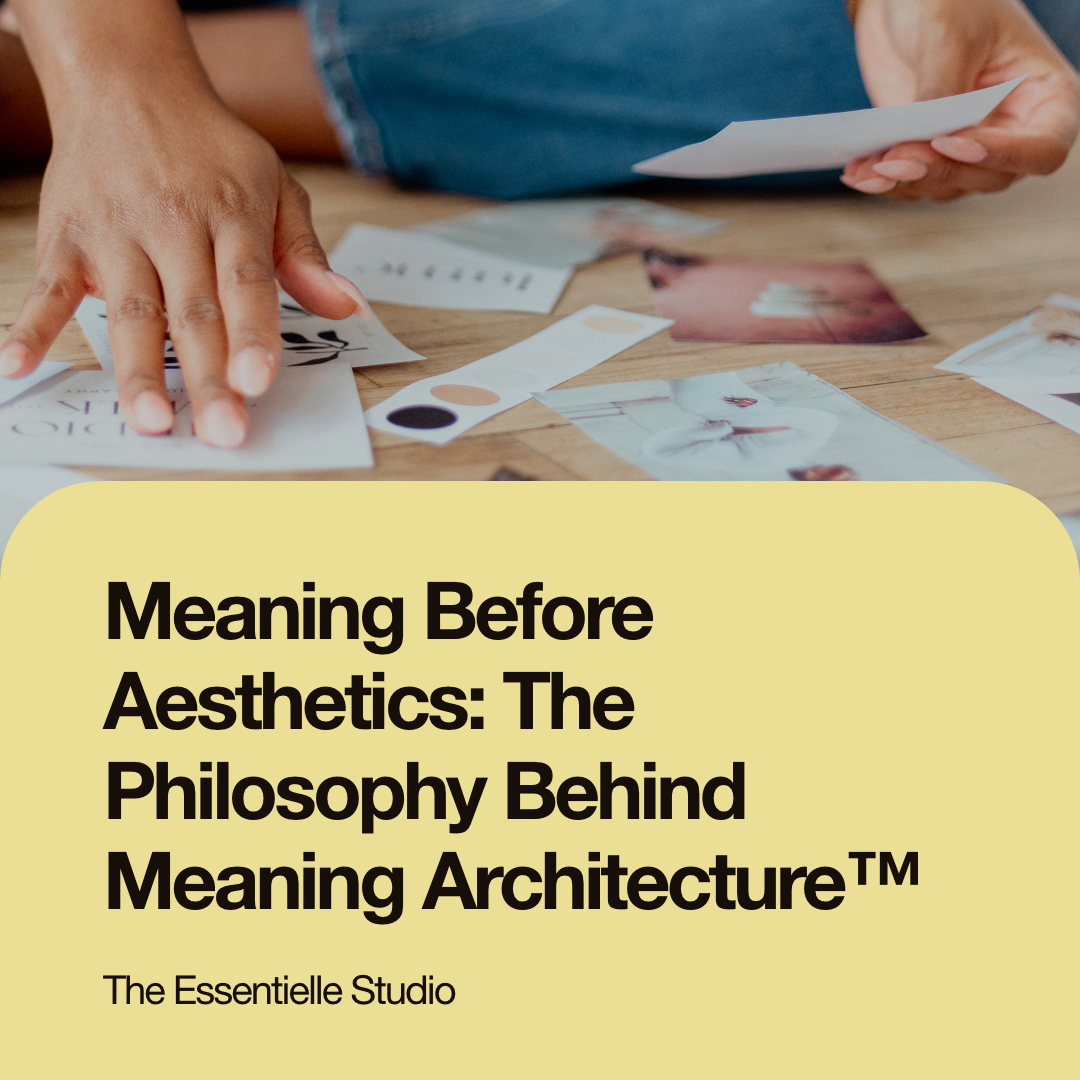
Most brands are built outside-in, starting with the logo and figuring out the meaning later, and I understand why this happens because the visual things feel tangible in a way that foundational strategy work doesn’t. You can show a logo to someone and get a reaction. You cannot really show someone a purpose statement and get the same dopamine hit. So people start where it feels productive to start, and by the time anyone asks what this brand actually means, there’s already a whole visual system built that the meaning has to be retrofitted to match.
But here’s what I’ve observed after years of working in brand strategy and after running my own studio through the same process I now take clients through: meaning that gets defined after the visuals are built isn’t really meaning, it’s justification, and there is a real difference between the two. Meaning that was excavated first, before anyone opened a design file or chose a font, has roots. It holds. It becomes the thing every future decision answers to. Meaning that was retrofitted to match what already exists is just a story you tell yourself about choices that were actually made subjectively, and it tends to drift the moment you try to build anything new on top of it…
Meaning precedes execution. Clarity precedes aesthetics. Architecture precedes identity.
This is the philosophical spine of the work I do at Essentielle Studio, and it’s not a trend or a random methodology I borrowed from somewhere else. It’s a conviction I arrived at through watching what happens to brands when they build in the wrong order, and through watching what changes when they don’t.
What it actually costs to build outside-in
When you begin with visuals, you make hundreds of small decisions without a foundation to make them against, and the result can genuinely look beautiful, which is the part that makes this so complicated to talk about. A brand built outside-in can look polished and intentional, and yet the founder still feels disconnected from it, still can’t talk about it with confidence, still senses that something is slightly off even when everyone around them is telling them it looks great. What I keep coming back to is this: it’s not about making something prettier. It’s about making something truer. Prettiness without truth is just design, and you can feel the difference between the two even when you can’t quite articulate it yet.
What Meaning Architecture™ is
Meaning Architecture™ is the proprietary framework I built at Essentielle Studio to solve this specific problem, a structured brand strategy methodology built on the belief that meaning must be defined before execution begins, not as a suggestion but as a requirement. It works in three phases where the first builds the meaning, the second translates that meaning into the governing laws and creative signals that will direct everything the brand creates, and the third expresses the meaning into visual and verbal and experiential reality. The sequence isn’t negotiable because each phase depends entirely on what was built in the one before it, and skipping or rushing any step compromises the integrity of everything that follows.
The thing I want to be clear about is that this framework doesn’t tell founders what their brand should be. It surfaces what it already is. The vision is almost always already present in the founder, sometimes fully formed and sometimes still clarifying itself, and what’s missing is the architecture that makes it legible, to the world and sometimes even to themselves.
Why the foundation has to come first
Think about a house, because I find this analogy actually captures it well. You can design the most beautiful interior imaginable, every finish considered and intentional and carefully chosen, but if the foundation underneath isn’t solid, none of it will hold the way it’s supposed to. The house will look fine from the outside for a while, and then things will start to shift in ways that are hard to trace back to a single source because the problem was always underneath everything else. A brand without a meaning foundation works the same way, and the drift is so gradual that most founders don’t notice it happening until they’re already far from where they intended to be.
When meaning is built first, that drift stops, and creative decisions stop being about preference and start being about alignment. You’re no longer asking what looks good. You’re asking what is true to what this brand means, and that is a fundamentally different question that produces fundamentally different work. That’s the philosophy behind all of this, and once you see it, it really does change how you look at everything.